

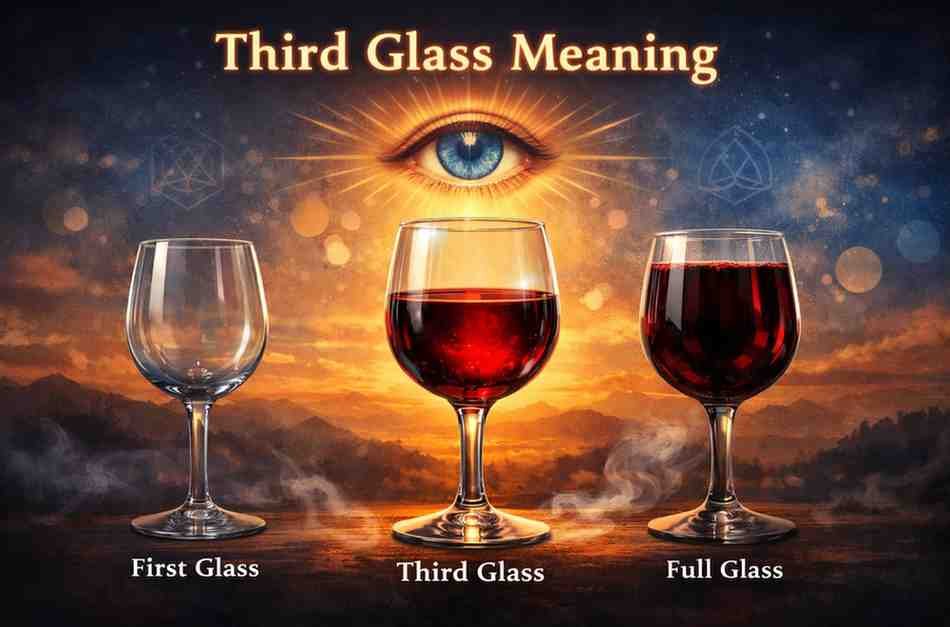
Understanding traditions often means looking beyond the surface. One phrase that has quietly gained curiosity across social conversations is the third glass meaning, a concept that blends symbolism, emotion, and cultural nuance. While it may sound simple, the idea behind the third glass carries layered interpretations shaped by history, human behavior, and modern storytelling. This article explores its origins, significance, and why it still resonates today.
Origins of the Third Glass Tradition
Historical roots of shared glasses
The idea of counting glasses or rounds of drinks can be traced back to ancient communal rituals. In many early societies, drinking together symbolized trust, unity, and mutual respect. The first glass often marked a beginning, the second deepened connection, and the third carried a more reflective purpose.
Rituals and symbolic numbers
Across cultures, the number three has long been associated with balance and completeness. From myths to religious traditions, three represents a turning point. This numerical symbolism naturally influenced social customs, where the third glass became more than just another drink—it marked a moment of intention and awareness.
Cultural and Social Interpretations
Social bonding and unspoken rules
In many social settings, especially gatherings or celebrations, the third glass often signals a shift in energy. Laughter may soften, conversations grow deeper, and people become more open. This is where the third glass meaning is often linked to honesty and emotional expression. It represents the point where social barriers start to fade.
Regional and cultural differences
Different cultures interpret this moment uniquely. In some European traditions, the third round of drinks is associated with toasts to friendship or remembrance. In other regions, it may symbolize moderation—a reminder to slow down and be mindful. These variations show how shared customs evolve while keeping a core symbolic thread.
Emotional and Psychological Symbolism
A moment of self-awareness
Psychologically, the third glass can represent a pause between indulgence and restraint. People often become more aware of their feelings and thoughts at this stage. The third glass meaning here reflects introspection, where emotions surface and authenticity takes center stage.
Balance between control and release
Human behavior studies suggest that early moments of social drinking are controlled and polite. By the third glass, individuals may feel relaxed enough to express vulnerability. This balance between control and release makes the third glass a symbolic crossroads rather than a casual act.
Modern-Day Usage and Popular References
Influence in literature and media
Modern storytelling has embraced subtle symbolism, and the third glass meaning appears in novels, films, and even song lyrics. Writers often use it to signal a character’s emotional shift or a turning point in a scene. It quietly tells the audience that something deeper is about to happen.
Everyday conversations and metaphors
Beyond media, the phrase has found its way into casual language. People may refer to the “third glass” metaphorically when describing moments of honesty, realization, or change. In this sense, the third glass meaning has evolved into a broader metaphor for emotional clarity and truth.
FAQs About the Third Glass
What does the third glass symbolize?
It often symbolizes a shift from surface-level interaction to deeper emotional or social awareness.
Is the third glass meaning the same in every culture?
No, interpretations vary, but many cultures associate it with balance, honesty, or reflection.
Does it always relate to drinking?
Not necessarily. It can also be used metaphorically to describe moments of realization or openness.
Why is the number three important?
The number three is widely seen as a symbol of completeness and transformation across traditions.
Conclusion
The third glass meaning is a fascinating example of how simple actions can carry profound symbolism. Rooted in history, shaped by culture, and reimagined in modern contexts, it represents a moment of transition—where connection deepens and awareness grows. Whether viewed as a social signal, an emotional milestone, or a metaphor for clarity, the third glass reminds us that meaning often lives in the moments we least expect.