

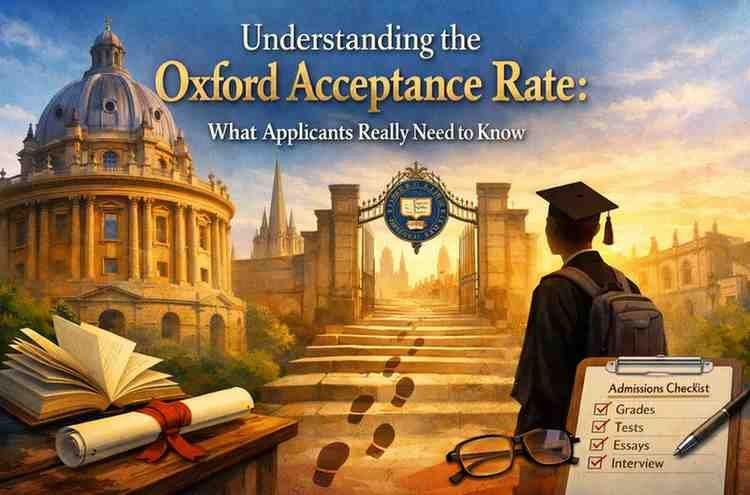
Getting into the University of Oxford is a dream shared by thousands of students around the world. With its historic colleges, world-class faculty, and unique tutorial system, Oxford represents academic excellence at the highest level. One of the first things applicants search for is the oxford acceptance rate, but that number alone does not tell the full story. This article breaks down what the acceptance rate means, what influences it, and how students can approach the application process with clarity and confidence.
What Does the Oxford Acceptance Rate Actually Mean?
The acceptance rate refers to the percentage of applicants who receive an offer of admission in a given year. For Oxford, this figure is generally low, reflecting its global reputation and highly selective admissions process. However, focusing only on the overall percentage can be misleading.
Oxford evaluates candidates holistically. Academic grades are important, but so are subject-specific aptitude tests, written work, interviews, and references. The oxford acceptance rate varies significantly depending on the course, college, and applicant background, which means some programs are far more competitive than others.
Course-Based Differences in Selectivity
Subjects like Medicine, Law, and Economics tend to receive a very high number of applications, making them extremely competitive. Meanwhile, some niche or less commonly chosen courses may have a slightly higher chance of admission, even though standards remain rigorous across all departments.
How Competitive Is Admission to the University of Oxford?
Oxford receives tens of thousands of applications each year from students across the UK and internationally. Undergraduate admissions are managed through UCAS, and each applicant typically applies to a specific course and college.
While the overall admissions statistics show a low admit percentage, it is important to understand that competition is primarily academic. Oxford looks for students who demonstrate exceptional ability, intellectual curiosity, and a genuine passion for their chosen subject. The oxford acceptance rate reflects this focus on quality rather than quantity.
The Role of Academic Excellence
High predicted grades or achieved grades are often a minimum requirement. For many courses, successful applicants are among the top students in their schools. Strong performance in admissions tests and interviews can make a decisive difference.
Factors That Influence Your Chances of Acceptance
Several elements beyond grades shape an applicant’s chances at Oxford. Understanding these can help students prepare more strategically.
First, admissions tests are used for many courses to assess critical thinking and subject knowledge. Second, written work provides insight into how a student constructs arguments and engages with ideas. Finally, interviews are designed to explore how applicants think, not just what they already know.
College choice also plays a role, though applicants are not disadvantaged by choosing a popular college. Oxford’s pooling system ensures that strong candidates can still receive offers even if their first-choice college is oversubscribed. This system helps balance the oxford acceptance rate across colleges while maintaining fairness.
International Students and Acceptance Rates
International applicants make up a significant portion of Oxford’s student body. While they often face additional challenges such as visa requirements and higher tuition fees, the admissions criteria remain academically consistent.
The acceptance rate for international students can be slightly lower due to the high volume of global applications. However, Oxford values diversity and actively seeks talented students from different educational systems. A strong academic record, clear motivation, and excellent interview performance can help international applicants stand out despite the competitive oxford acceptance rate.
Support for Global Applicants
Oxford provides detailed guidance for international qualifications and offers resources to help students understand the admissions process. This transparency allows applicants to assess their readiness realistically.
FAQs About Oxford Admissions
Is Oxford harder to get into than other UK universities?
Yes, Oxford is generally more selective due to its academic reputation and tutorial-based teaching system.
Does applying to an unpopular course improve my chances?
Applying to a course you genuinely enjoy is more important. Interest and aptitude matter more than perceived popularity.
Can I apply to both Oxford and Cambridge?
No, applicants must choose either Oxford or Cambridge in a single admissions cycle.
Is the acceptance rate the same every year?
No, it can vary slightly depending on the number and quality of applications received.
Conclusion
Understanding the admissions process requires looking beyond simple numbers. While the acceptance rate is low, it reflects Oxford’s commitment to academic excellence rather than an attempt to discourage applicants. Students who prepare thoroughly, choose the right course, and engage thoughtfully with the process can still find success. The oxford acceptance rate should be seen as a guide, not a barrier, and with the right preparation, Oxford can be an achievable goal for highly motivated learners.