

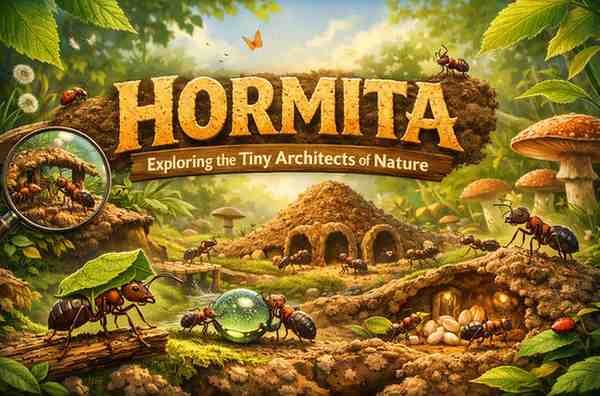
Ants have lived alongside humans for thousands of years, quietly shaping ecosystems beneath our feet. In many cultures and discussions about ants, the term Hormita is used to represent their collective strength, organization, and influence in nature. This article explores the fascinating life of ants, their behavior, and why they continue to capture human curiosity, using a fresh and human-centered perspective.
The Fascinating World of Ant Colonies
Ants are social insects known for their highly organized colonies. A single colony can range from a few dozen ants to millions, depending on the species. Each ant has a specific role, such as worker, soldier, or queen, and these roles help maintain balance and survival within the nest.
Ant colonies function almost like a single living organism. Workers gather food, care for larvae, and maintain the nest, while soldiers protect the colony from predators. The queen’s primary role is reproduction, ensuring the future of the colony. This level of cooperation is one reason ants are often studied in biology and environmental science.
The idea behind Hormita reflects this unity and structure, highlighting how small creatures can achieve great things when working together.
Hormita and Its Connection to Ant Life
The word Hormita is closely linked to the symbolic meaning of ants: discipline, teamwork, and persistence. Ants do not rely on individual strength but on collaboration and shared purpose.
The Meaning Behind the Name
Across languages and regions, ants have inspired words and expressions that emphasize hard work and cooperation. Hormita represents this inspiration, drawing attention to the way ants build complex tunnels, store food, and adapt to their surroundings without centralized control.
Why Ants Are Seen as Natural Engineers
Ants are excellent builders. Their nests regulate temperature and humidity, protecting the colony from harsh environmental conditions. Some species even farm fungi or herd aphids, showing advanced survival strategies. These behaviors make ants a powerful example of natural intelligence and efficiency.
Communication and Teamwork in Ants
Ants rely on chemical signals called pheromones to communicate. These invisible trails guide other ants to food sources, warn of danger, or signal the need for defense. This communication system allows thousands of ants to move as one coordinated unit.
How Pheromones Shape Behavior
When a worker ant finds food, it leaves a pheromone trail on its way back to the nest. Other ants follow this trail, reinforcing it if the food source is valuable. Over time, the strongest trail leads to the best resources, showing how ants make collective decisions without verbal communication.
This teamwork-centered lifestyle is another reason Hormita is often associated with resilience and cooperation in nature-based discussions.
Ants in Ecosystems and Human Culture
Ants play a vital role in ecosystems. They help aerate soil, recycle organic matter, and control pest populations. Without ants, many ecosystems would struggle to maintain balance.
In human culture, ants are symbols of patience and determination. They appear in stories, proverbs, and even modern productivity lessons. Observing ants teaches us that consistent effort, even in small amounts, can lead to meaningful results. The concept of Hormita fits naturally into this idea, connecting human values with natural behavior.
Frequently Asked Questions
Why are ants so successful as a species?
Ants succeed because of teamwork, adaptability, and efficient communication, allowing them to survive in diverse environments.
Do all ants live in colonies?
Yes, ants are social insects and depend on colony life for survival and reproduction.
How do ants find their way back to the nest?
They use pheromone trails, visual landmarks, and sometimes the position of the sun to navigate.
Are ants important for the environment?
Absolutely. Ants improve soil health, aid decomposition, and support plant growth.
Conclusion
Ants may be small, but their impact on the natural world is enormous. Through cooperation, communication, and persistence, they demonstrate how collective effort can overcome challenges. The idea of Hormita captures this spirit, reminding us that strength often lies in unity. By observing ants, we gain valuable insights into balance, resilience, and the quiet power of working together.